but they can be another useful clue when combined with the other indicators.
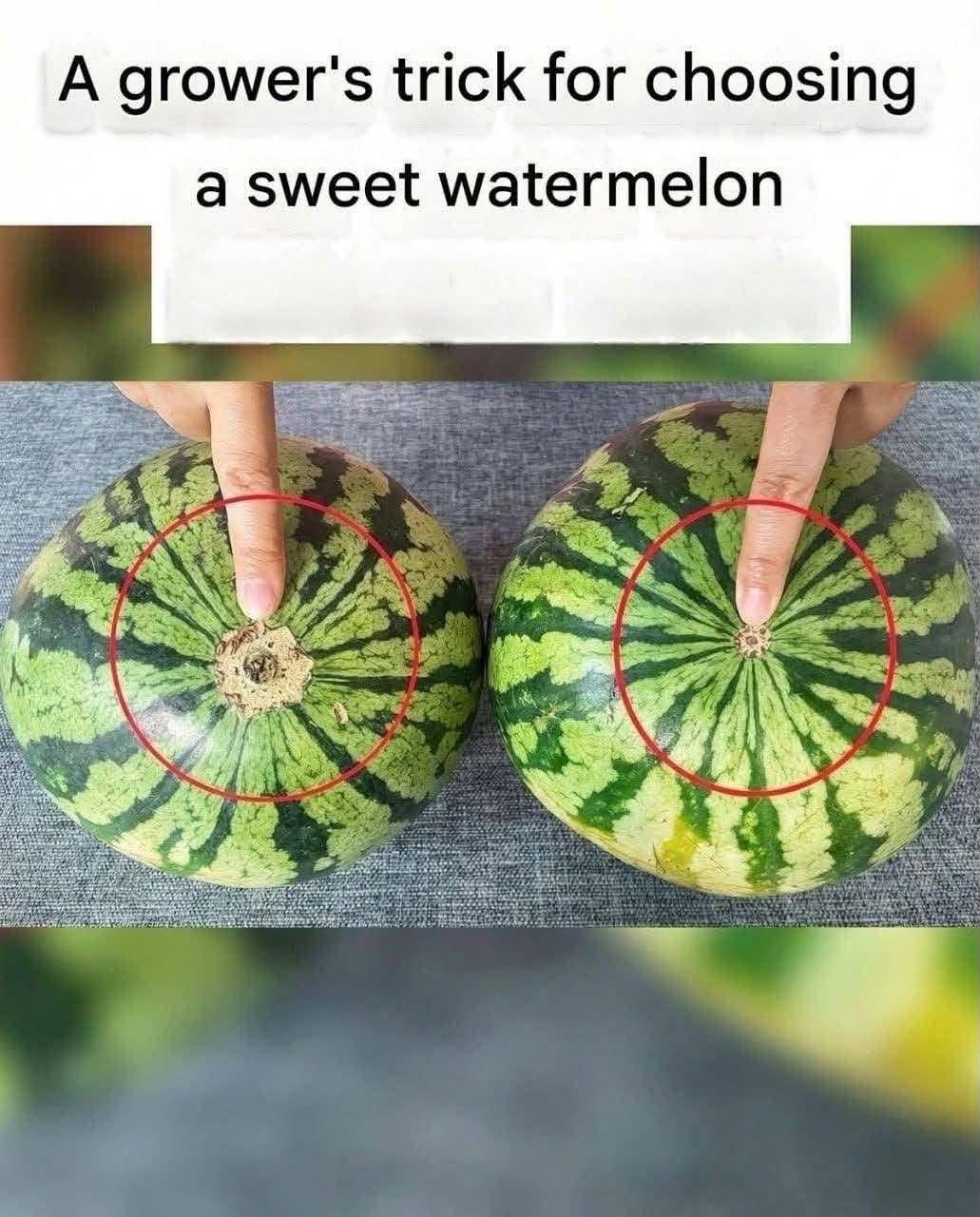
4. Examine the Blossom End
Turn the watermelon over and inspect the blossom end, sometimes called the “belly button.”
A quality watermelon typically has:
- A small blossom scar
- A neatly closed end
Larger blossom scars can sometimes be associated with differences in fruit development, but this should not be used as the only measure of ripeness.
5. Pick Up the Watermelon
Weight can be another useful clue when selecting a watermelon.
A ripe watermelon should feel heavy