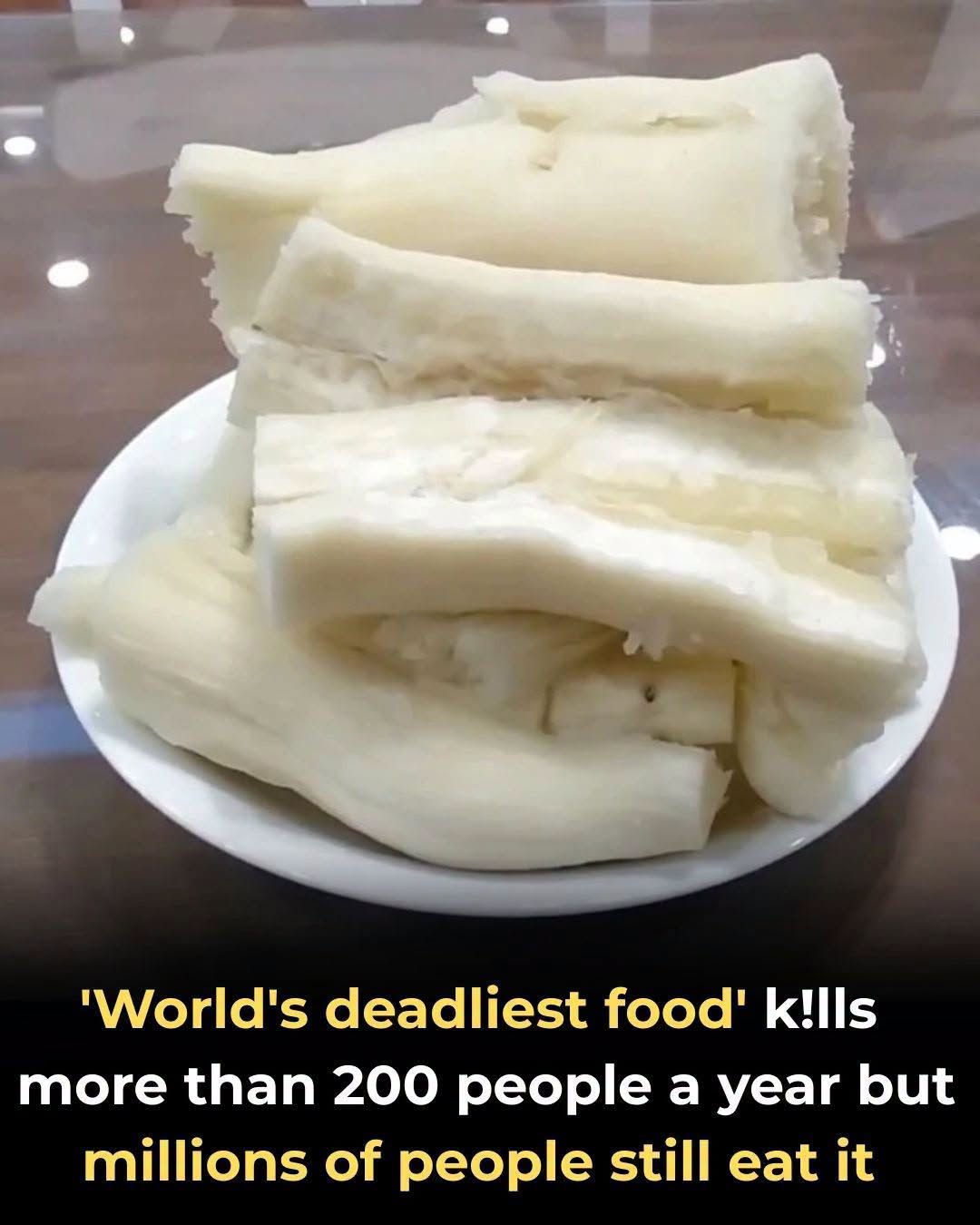
has not been adequately prepared can therefore cause cyanide poisoning.
The key is proper preparation
Cassava is not inherently a “deadly food.” The risk depends largely on the variety of cassava, how it is processed, and how much cyanogenic material remains after preparation.
Traditional preparation methods have been developed specifically to reduce these compounds. Depending on the type of cassava and the local practice, these methods can include:
- Peeling the roots
- Grating or crushing them
- Soaking
- Fermenting
- Drying
- Boiling or otherwise thoroughly cooking them
These processes can substantially reduce cyanogenic